Neural Therapy
Treatment Details
Neural therapy originates from conventional medicine and is understood as a holistic regulatory therapy. The goal of neural therapeutic treatment is to restore disrupted regulatory systems at various levels back to balance.
In a healthy body, coordination processes occur continually and unnoticed by consciousness, managing all organs, muscles, nerves, connective tissue, and skin.
The body’s own regulatory system is capable of compensating for even minor and hardly noticeable functional disorders.
However, many small disturbances can disrupt the body’s self-regulation and manifest as pain, for example.
The holistic perspective of neural therapy suggests that, for instance, damaged teeth, chronic sinus inflammation, and organs like the tonsils, as well as scars, may act as disturbances or foci that can cause pain in other parts of the body.
Neural therapy can be applied for the following issues:
Some indications:
Head: Migrainous headaches, neck headaches, neuralgiform facial pain, whiplash injuries, and neck pain.
Eyes: Inflammatory eye diseases, movement disorders of the eyelids.
Nose: Inflammatory or allergic conditions of the nose or sinuses.
Ear: Inflammatory ear diseases, tinnitus.
Diseases in the area of the tonsils, salivary glands, larynx: Hoarseness, recurrent sore throats, voice disorders.
Diseases in the dental-jaw area, Functional heart or respiratory complaints: Heart rhythm disturbances, palpitations, dry cough, breathing difficulties.
Abdomen: Stomach and intestinal disorders of various causes, gastritis, liver-gallbladder issues, digestive disturbances.
Urinary tract: Inflammations or irritative states.
Genitals: Functional disorders or inflammatory diseases.
Musculoskeletal disorders: Pain and movement restrictions in the spine, lumbago, sciatica, and disc herniations. Joint pain, shoulder, elbow, hip, knee joint issues, etc. Pain-relieving effects in osteoarthritis and inflammatory joint diseases. Pain after amputations.
Vegetative dysfunctions: Circulatory disorders, disturbances of temperature regulation, sleep disorders, support for climacteric issues, assistance with irritability and sadness, thyroid dysfunction.
Wound healing disturbances: Painful scars that disturb the energy flow.
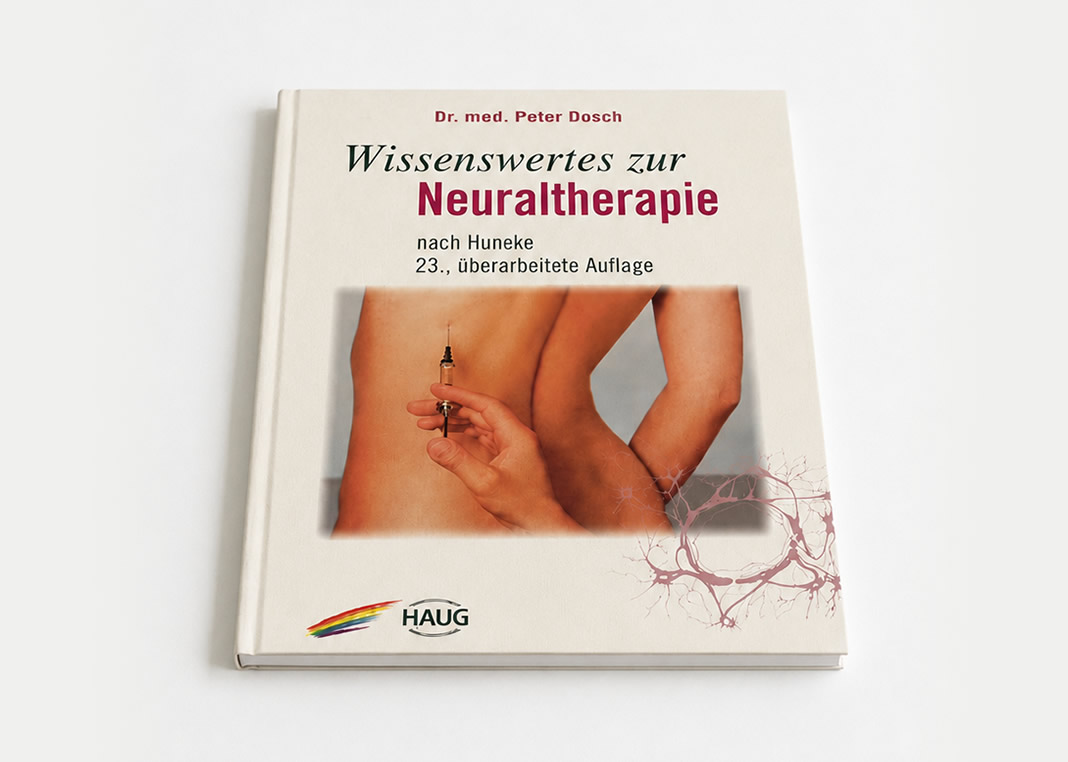
We recommend the valuable short booklet by Peter Dosch for therapy preparation:
Essential Information on Neural Therapy, ISBN: 3-8304-0805-6

Eligibility Profile
Neural therapeutic injections are particularly suitable for adults who are suffering from pain or have chronic conditions.
Treatment Duration
It varies greatly depending on whether many scars are treated with subcision or only 1-2 injections are given in 10 to 30 minutes.
Are there any risks?
With proper indication and injection technique, risks are low.
Application Areas
Neural therapy can provide relief for many symptoms and conditions, and may even lead to freedom from complaints.
QUESTIONS ABOUT TREATMENT
What is Neural Therapy and how does it work?
Neuraltherapie ist eine wirksame Methode zur Behandlung von Schmerzen und verschiedenen Krankheiten. Durch die Injektion kleiner Mengen von Procain (örtlich wirkendes Anästhesiemittel) werden Fehlfunktionen des Organismus normalisiert und damit verbundene gesundheitliche Störungen in der Selbstheilung unterstützt.
What ailments is neural therapy used for?
Neuraltherapie ist bei einer Vielzahl von Beschwerden wirksam, insbesondere bei Schmerzen, bei chronischen Erkrankungen, die durch ein zugrunde liegendes Störfeld bedingt sind. Störfelder sind definiert als chronische Entzündungszustände, die den Gesamtorganismus „energetisch“ schwächen und Beschwerden in anderen Bereichen des Körpers erzeugen können. Störfelder, z.B. Narben oder Zahnherde sind „stumm“ und verursachen keine direkten Beschwerden, sondern unterhalten Symptome in entfernten Körperteilen.
How does a treatment procedure work?
Es werden kleine Mengen von Procain, mit Nadeln unterschiedlicher Länge, in Narben, Gelenke oder in andere Körpergewebe gespritzt.
Is the treatment painful?
Die Behandlung ist meist nur schmerzhaft beim Einstich in die Haut, die mit vielen Nerven versorgt ist. Es werden dünnste Nadeln verwendet, die in der Regel nur einen kleinen Pieks, ein wenig Druck oder ein schwaches Brennen verursachen.
How many sessions are usually necessary?
Die Anzahl Sitzungen ist sehr unterschiedlich, individuell und variiert zwischen ca. 1-10 Sitzungen, je nachdem, wie viele Injektionen pro Sitzung vorgenommen werden.
Are there risks or side effects?
Die Neuraltherapie ist sehr nebenwirkungsarm, es können lokale Symptome, wie Hämatome (Blutergüsse) oder leichte Schmerzen an der Einstichstelle auftreten, seltener Schwindelgefühl oder Müdigkeit. Eine Erstverschlimmerung, d.h. eine vorübergehende Verstärkung der Symptome ist möglich.
Is neural therapy covered by health insurance?
Neuraltherapie wird von den Schweizer Krankenkassen übernommen.